The post-transition metals are a group of elements in the periodic table. They are located to the right of the transition metals and to the left of the metalloids. They are also referred to as “other” metals and “poor” metals. Scientists can’t seem to agree on what to call this group of metals (poor, other, post-transition) or which elements should be included. Typically the elements of the post-transition metals include any metal in groups 13, 14, and 15 which are aluminum, gallium, indium, tin, thallium, lead and bismuth. Polonium is often classified as a post-transition metal as well. They are solid metal under standard conditions. Like most metals they are malleable, ductile, and good conductions of heat and electricity. They have a fairly high density. In comparison to transition metals, they generally are softer and have lower melting and boiling points.
The Post-Transition Metals are:

- Aluminum (Al)
- Gallium (Ga)
- Indium (In)
- Tin (Sn)
- Thallium (Tl)
- Lead (Pb)
- Bismuth (Bi)
Aluminum (Al)
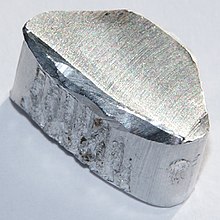
Name: Aluminum
Symbol: Al
Atomic Number: 13
Atomic Mass: 26.981539 amu
Melting Point: 660.37 °C
Boiling Point: 2467.0 °C
Number of Protons/Electrons: 13
Number of Neutrons: 14
Classification: P. T. Metals
Crystal Structure: Cubic
Density @ 293 K: 2.702 g/cm3
Color: Silver
British Spelling: Aluminium
IUPAC Spelling: Aluminium
Tin (Sn)
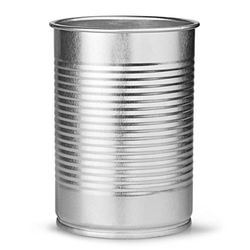
Name: Tin
Symbol: Sn
Atomic Number: 50
Atomic Mass: 118.71 amu
Melting Point: 231.9 °C
Boiling Point: 2270.0 °C
Number of Protons/Electrons: 50
Number of Neutrons: 69
Classification: P. T. Metals
Crystal Structure: Tetragonal
Density @ 293 K: 7.31 g/cm3
Color: white
Lead (Pb)
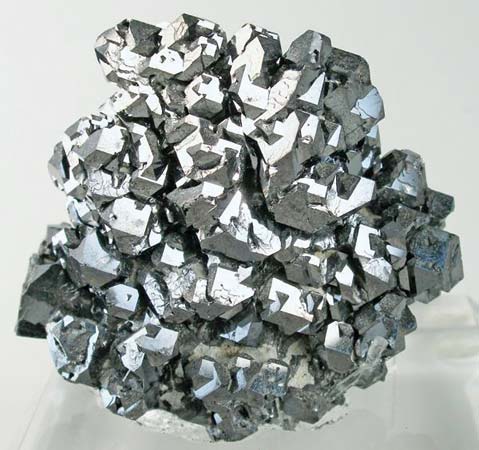
Name: Lead
Symbol: Pb
Atomic Number: 82
Atomic Mass: 207.2 amu
Melting Point: 327.5 °C
Boiling Point: 1740.0 °C
Number of Protons/Electrons: 82
Number of Neutrons: 125
Classification: P. T. Metals
Crystal Structure: Cubic
Density @ 293 K: 11.34 g/cm3
Color: bluish
 Chemistry