(click on names to get more information about the scientist)
Dmitri Mendeleev

Dmitri Mendeleev, Russian in full Dmitry Ivanovich Mendeleyev, (born January 27 (February 8, New Style), 1834, Tobolsk, Siberia, Russian Empire-died January 20 (February 2), 1907, St. Petersburg, Russia), Russian chemist who developed the periodic classification of the elements. Mendeleev found that, when all the known chemical elements were arranged in order of increasing atomic weight, the resulting table displayed a recurring pattern, or periodicity, of properties within groups of elements. In his version of the periodic table of 1871, he left gaps in places where he believed unknown elements would find their place. He even predicted the likely properties of three of the potential elements. The subsequent proof of many of his predictions within his lifetime brought fame to Mendeleev as the founder of the periodic table.
Marie Curie
Marie Curie, née Maria Salomea Skłodowska, (born November 7, 1867, Warsaw, CongressKingdom of Poland, Russian Empire—died July 4, 1934, near Sallanches, France), Polish-born French physicist, famous for her work on radioactivity and twice a winner of the Nobel Prize. With Henri Becquerel and her husband, Pierre Curie, she was awarded the 1903 Nobel Prize for Physics. She was the sole winner of the 1911 Nobel Prize for Chemistry. She was the first woman to win a Nobel Prize, and she is the only woman to win the award in two different fields.
John Dalton
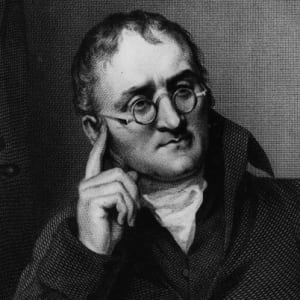
John Dalton, (born September 5 or 6, 1766, Eaglesfield, Cumberland, England—died July 27, 1844, Manchester), English meteorologist and chemist, a pioneer in the development of modern atomic theory. He was the first chemist to give the modern idea for atom. He explained that atom has a ‘peach-like’ structure, with a nucleus in the middle and some other smaller particles that rotate around it.
Amedeo Avogadro
Amedeo Avogadro, in full Lorenzo Romano Amedeo Carlo Avogadro, conte di Quaregna e Cerreto, (born August 9, 1776, Turin, in the Kingdom of Sardinia and Piedmont [Italy]—died July 9, 1856, Turin), Italian mathematical physicist who showed in what became known as Avogadro’s law that, under controlled conditions of temperature and pressure, equal volumes of gases contain an equal number of molecules.
Robert Boyle
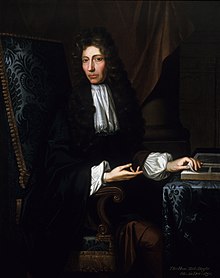
Robert Boyle, (born January 25, 1627, Lismore Castle, County Waterford Ireland—died December 31, 1691, London, England), Anglo-Irish natural philosopher and theological writer, a preeminent figure of 17th-century intellectual culture. He was best known as a natural philosopher, particularly in the field of chemistry, but his scientific work covered many areas including hydrostatics, physics, medicine, earth sciences, natural history, and alchemy. His prolific output also included Christian devotional and ethical essays and theological tracts on biblical language, the limits of reason, and the role of the natural philosopher as a Christian. He sponsored many religious missions as well as the translation of the Scriptures into several languages. In 1660 he helped found the Royal Society of London.
 Chemistry